

Imagine this.
You describe a video concept to a software. It understands your brand, tone, color palette, and target audience. Within minutes, it generates a storyboard, writes a script, edits raw footage, adds music, adjusts lighting, color-grades the scenes—and boom! Your video is ready.
No huge crew. No days of editing. No massive budgets.
Sound like science fiction?
Welcome to 2025, where AI is no longer just a buzzword—it’s the silent editor, director, writer, and sometimes even the actor behind the scenes.
In a world moving at the speed of scrolls and swipes, the fusion of AI and video production is nothing short of revolutionary. Whether you're a content creator, a brand, or working with a professional video production company in India, embracing AI means you’re not just staying relevant—you’re staying ahead.
Let’s take a walk through the AI-powered video universe of 2025 and uncover what’s truly possible today, what’s evolving fast, and what it means for the future of storytelling.
Lights, Camera... Algorithms?
Gone are the days when video production was strictly a human craft. In 2025, AI doesn’t just support video creation—it actively drives it.
We're talking about:
Automated scriptwriting
AI-generated avatars
Real-time background replacement
Voice cloning and dubbing
AI-assisted video editing
Predictive analytics for video performance
And this is just the beginning.
For a modern video production agency, these tools have unlocked a whole new level of speed, creativity, and customization.
Scriptwriting: From Ideas to Narratives in Seconds
Struggling with what to say in your video? Let AI do the writing.
With natural language generation tools like ChatGPT, Jasper, and others evolving rapidly, AI can:
Generate full scripts based on keywords or topics
Rewrite existing copy for different tones or audiences
Personalize messages based on viewer data
Imagine typing, “Write a 60-second explainer video for an eco-friendly water bottle”—and getting a polished script in seconds. That’s not future tech. That’s today’s norm.
AI Avatars & Synthetic Actors
In 2025, you don’t always need a human on set. Enter AI avatars—virtual characters that can deliver scripted lines with facial expressions, lip-syncing, and real emotions.
Platforms now allow users to:
Choose a realistic avatar
Input text (or a script)
Select voice tone, language, and even accent
Get a full spokesperson video in minutes
For brands who need frequent content—especially for explainer videos or multilingual markets—this is a game-changer. No need to hire talent or book studios.
It’s especially valuable for a video production company in India that’s catering to diverse regional audiences—imagine producing the same ad in 8 languages, overnight, using AI.
Editing with AI: From Hours to Moments
Remember the days of scrubbing through footage, manually picking shots, adjusting transitions, and syncing music? AI has simplified that entire process.
AI editing tools in 2025 can:
Automatically trim silences and errors
Identify the best takes
Match footage to music beats
Add subtitles in real-time
Suggest or apply cinematic color grading
Detect and stabilize shaky footage
It’s not just about automation—it’s about amplification. AI doesn’t replace editors; it supercharges their workflows, giving them more time to focus on creative decisions.
Voiceovers and AI Dubbing
Voiceovers once required a studio, a trained artist, and hours of retakes. Not anymore.
AI voice tools can now:
Clone real human voices
Generate realistic voiceovers in various languages
Change tone, emotion, speed, and style
Lip-sync the audio with video automatically
This has huge implications for global campaigns. For example, a brand can release a single product video dubbed into 10 Indian languages without hiring a single voice artist—something that makes a video production agency far more agile and cost-effective.
Predictive Video Intelligence
AI doesn’t just help create the video. It helps predict how it will perform.
Using advanced machine learning models, platforms can now:
Analyze your audience’s behaviour
Suggest the best posting time
Predict engagement metrics
Recommend scene edits for better retention
Auto-generate A/B tested versions
So you don’t just hope your video works. You know what works before you publish it.
For a fast-paced content world, where attention spans are shrinking, this data-first approach helps brands and creators make smarter, faster decisions.
Real-Time Localization with AI
2025 isn’t about one-size-fits-all content. It’s about personalization at scale.
With AI, you can:
Auto-translate captions and scripts
Dub audio in native accents
Adjust visual cues based on region
Swap text overlays dynamically
So your audience in Delhi, Dubai, and Dallas can each watch a version of the same video—tailored just for them. And the best part? No re-shooting needed.
That’s where a video production company in India using AI can offer global-quality videos for local audiences in record time.
AI + Creativity = A Powerful Duo
“But won’t AI make everything feel robotic?”
That’s the million-dollar question—and a valid one.
AI may be efficient, but it still needs a human spark.
The magic lies in collaboration, not replacement. AI takes care of the heavy lifting—research, rendering, revisions—so that writers, directors, designers, and editors can focus on the emotion, the humour, the art.
A skilled video production agency knows how to blend AI’s muscle with human intuition to create something truly memorable.
What's Next? The Future of AI in Video Production
We’re already seeing:
AI-powered storyboarding based on text prompts
Fully virtual video sets using AR and green screens
Interactive videos with real-time viewer input
AI-generated music scores customized to mood and duration
Emotion tracking to adjust scenes based on viewer reactions
By 2030, we could very well see:
Entire short films created in minutes
Real-time video personalization for every viewer
AI directors giving live feedback to actors on set
It’s not far-fetched. It’s inevitable.
Final Thoughts: Embrace the Shift, Don’t Fear It
AI in video production isn’t about replacing creativity—it’s about redefining it.
If you’re a business, this means faster content creation, lower costs, and better audience targeting.
If you’re a creator, this means focusing more on your vision, while AI handles the grind.
If you’re collaborating with a video production company in India, this means smarter workflows, scalable solutions, and storytelling that’s both tech-savvy and human-driven.
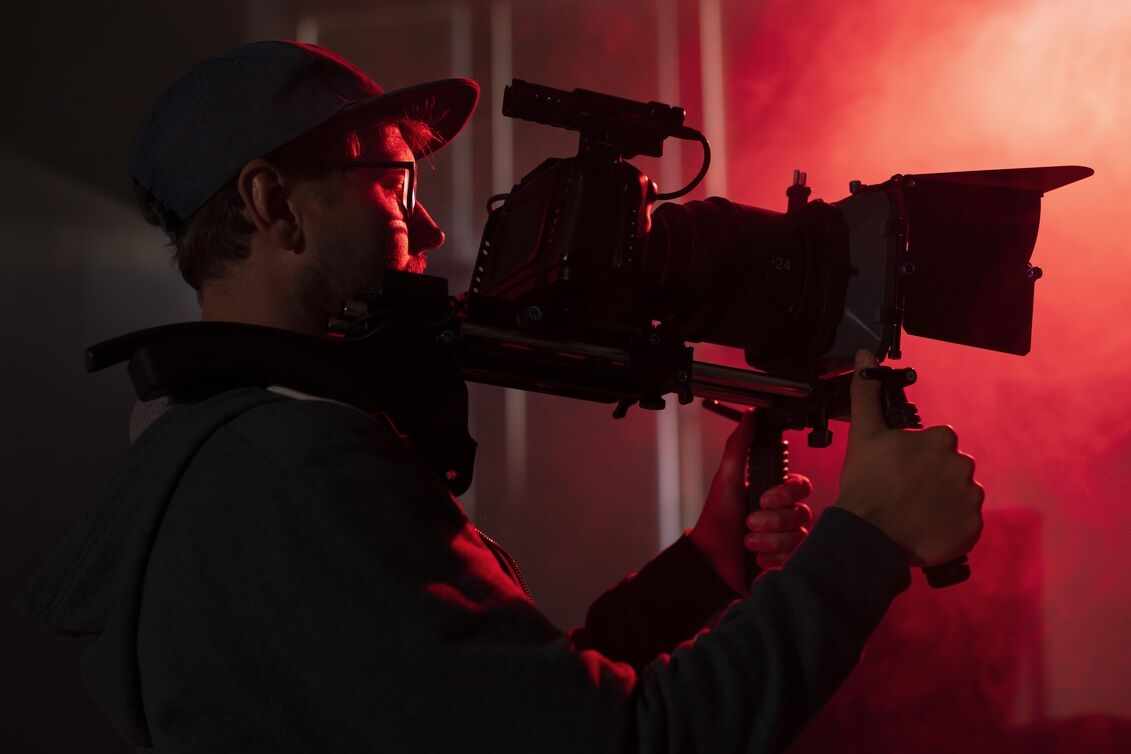
In 2025, the cameras may still roll, but behind the lens?
There’s a powerful algorithm ready to help you tell your story—faster, better, and bolder than ever before.
Lights. Camera. Artificial Intelligence.
The future of video is already here. And it’s just getting started.








Write a comment ...